I’ve been tinkering with HTML since I was 10 or 11 years old.
I’m still not that great at it because I never spent enough time diving into it.
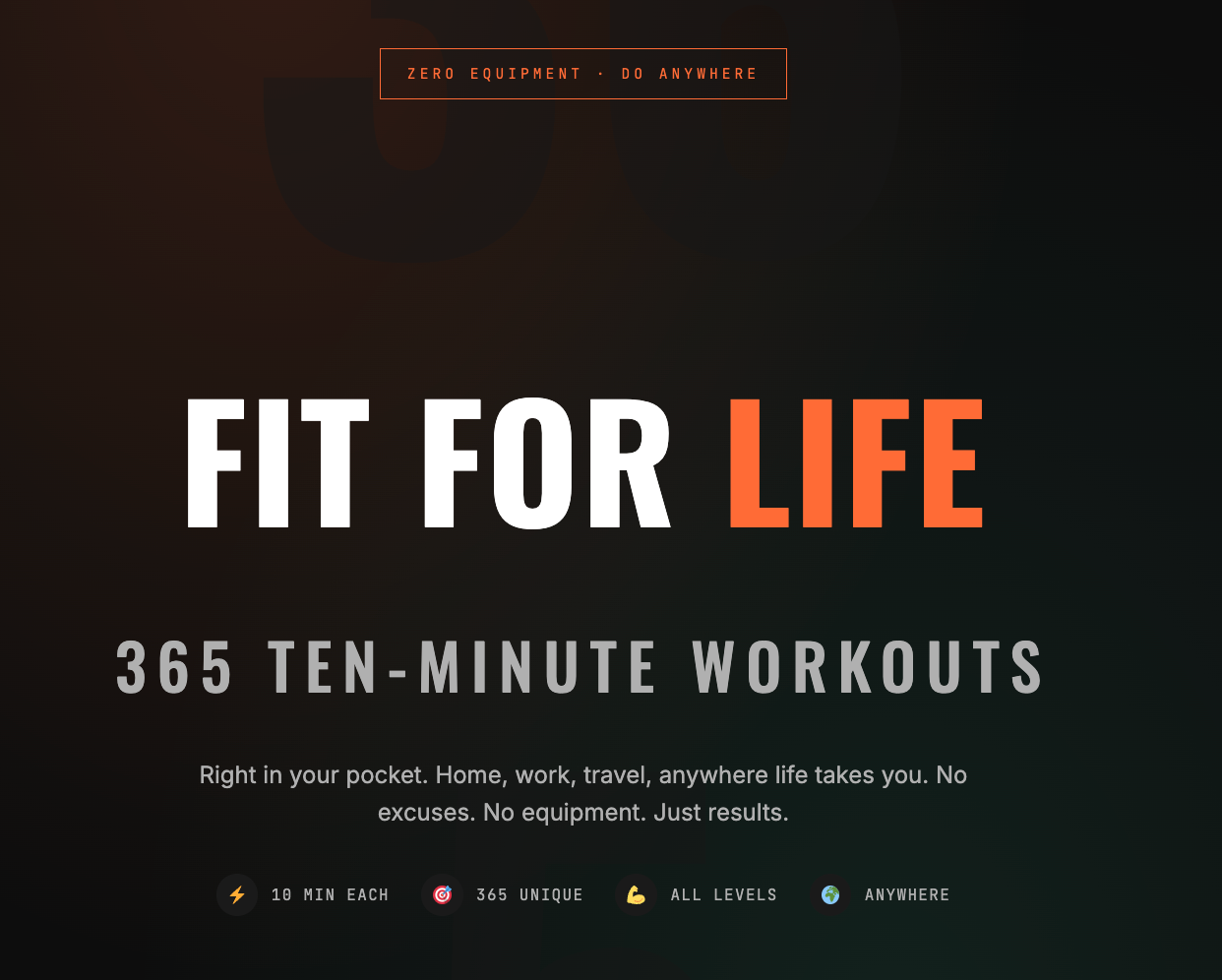
But I just shipped a product — a web application with 365 unique workouts, an exercise library, interactive features, and somehow it got paying customers.
I built it using vibe coding. And the experience taught me more about product management than a decade in the industry.
What Even Is Vibe Coding?
Vibe coding is what happens when people who aren’t developers use AI tools to build real products.
You describe what you want in plain English. The AI writes the code. You test it, tweak it, describe the next thing, repeat. No computer science degree. No bootcamp. No years of learning syntax.
Just vibes.
It sounds like a joke. It’s not. People are shipping real products this way — apps, tools, websites, entire businesses. The barrier to building just dropped to zero.
I’m one of those people now.
The Problem I Was Solving
I’ve traveled to over 60 countries. I’ve been lifting and training for over 20 years. And the biggest challenge I’ve faced isn’t finding motivation — it’s finding consistency when life gets chaotic.
Hotels with no gyms. Tiny Airbnbs. Airports. Time zones that destroy your schedule. The excuses pile up fast when you’re on the road.
I’m also a bit of a germaphobe, so I don’t always want to do exercises on the floor. I prefer doing many while standing.
So I built something for myself: a library of 10-minute bodyweight workouts I could do anywhere. No equipment. No space requirements. No excuses.
I used it in a cramped Airbnb in London when there wasn’t a gym nearby. I used it in hotel rooms across the Middle East. I used it in airports, parks, and parking lots.
It worked. So I turned it into a product.
Building V1: The PM Instinct That Almost Killed It
Here’s where my product management background became both an asset and a liability.
I knew how to scope. I knew how to ship. I knew the MVP mindset: get something out, learn, iterate.
So V1 was simple. 365 workouts. Ten minutes each. Organized by day. Clean interface. Ship it.
But I also had a list of features I desperately wanted to add….a whole document I might add. Ideas that would make it “better.” Ideas that would make it more impressive, more complete, more… complicated.
I had to resist every single one.
The temptation to over-build before you have users is the silent killer of products. You convince yourself you need one more feature, one more polish, one more thing before anyone can see it.
That’s fear disguised as perfectionism.
I shipped V1 knowing it wasn’t perfect. That was the point.
The Feedback That Changed Everything
One of my early customers reached out with feedback that validated something I’d suspected but hadn’t prioritized.
They loved the workouts. But they didn’t always know what the exercises were.
I had an inkling this could be friction. But I wanted it verified before I invested time fixing it. A real customer verified it.
So I took a two-week sprint and rebuilt.
V2 added short descriptions under every exercise — you could see what the movement was at a glance without clicking anything.
Then I added exercise tooltips: tap a question mark next to any exercise and get a full step-by-step breakdown. No Googling. No YouTube.
Everything self-contained.
Same product. Just better. Because a user told me what was actually missing.
This is the part most builders skip. They guess what users want. They build based on assumptions. They never ask.
The best product decisions I made came from shutting up and listening.
The Mission Behind the Product
Here’s what I had to keep reminding myself during the build:
This isn’t about aesthetics. This isn’t about getting shredded. This isn’t about bodybuilding.
It’s about longevity.
Research shows that just 10–11 minutes of moderate exercise per day can reduce mortality risk by around 25%. That’s not a typo. Eleven minutes.
My mission isn’t to create fitness influencers. It’s to get people to move their bodies. That’s it.
Move while you’re on a commercial break. Move while you’re waiting for your coffee. Move in the airport bathroom if you have to. It doesn’t matter where. It matters that you move.
The product reflects this philosophy. The workouts are short because consistency beats intensity.
They require no equipment because excuses kill more fitness goals than bad programming ever will. They’re designed for real life — messy, busy, traveling, imperfect life.
The Stacking Philosophy
People push back on 10-minute workouts. “That’s not enough,” they say. “You can’t get fit in 10 minutes.”
They’re missing the point.
The 10-minute workout is the floor, not the ceiling. It’s designed so you never miss a day. But the real magic happens when you stack.
I typically do 3–4 walks a day on top of my workouts. I count physical therapy as movement (because those sessions leave my body more beat up than my workouts). I count cleaning the house, picking up dog poop, doing laundry. All movement counts.
Standing while you work. Getting up every hour. Taking stairs. Walking to get coffee instead of having it delivered.
This is how the fittest people I’ve observed actually live. They’re not crushing two-hour gym sessions. They’re moving constantly, in small doses, throughout the entire day.
When I was in high school a women in her early 50s told me, you should never be in the gym for more than 45 minutes. I finally understand what she meant several years later. She’s right.
The product is the anchor. The lifestyle is the system.
What Vibe Coding Taught Me About Product
Building this product with AI tools taught me things I couldn’t have learned managing products for other companies.
Constraints force clarity. When you can’t code everything you imagine, you have to decide what actually matters. Most features don’t. The core value does.
Users know more than you. I had theories about friction. A customer confirmed them in one email. Stop theorizing and start asking.
Ship before you’re ready. V1 was imperfect. V2 is better. V3 will be better still. The only way to improve is to get it into the world and let reality teach you.
Simplicity is the product. I kept wanting to add complexity. The users wanted simplicity. They didn’t need more — they needed less, done well.
The mission keeps you focused. Every time I got distracted by a shiny feature idea, I asked: does this help people move more? If the answer was no, I cut it.
The Scoop On Building
You don’t need to be a developer to build a product anymore.
You need clarity about the problem you’re solving. You need willingness to ship imperfect work. You need discipline to listen more than you assume.
The technical barrier is gone. AI handles that now.
What remains is everything that was always hard: the thinking, the editing, the restraint, the listening. The code was never the bottleneck. The clarity was.
I’m a product manager who still can’t really code. Yet, I built a product.
If you’ve been waiting until you learn to code, stop waiting. The tools exist. The barrier is gone.
The only question left is: what are you going to build? Why are you building it? What pain point are you trying to solve? And forget about saturation. According to Ecclesiastes there is rarely anything new under the sun. People are essentially buying you, your brand, and your solutions.
Today’s FL10 Minute Workout: Robotic Dancing
10 min · No gym · No equipment · 2 min each
- High Knees
- Shoulder Taps
- Side Lunges
- Hip Circles
- Jumping Jacks
Get FL10 minute workouts you can do anywhere.
This content is for informational and educational purposes only. It is not medical advice. Always consult a qualified healthcare professional before making changes to your diet, exercise routine, or health practices.