I’m Not an Expert at Anything, And Maybe…That’s Okay
We were having a dinner in Europe when he said something I couldn’t shake.
He wasn’t aiming for the top one percent of anything. His target was the top two to three percent, in multiple things.
I contemplated that sentence for months.
Eventually I followed up and asked him directly: when did you adopt that philosophy, and why?
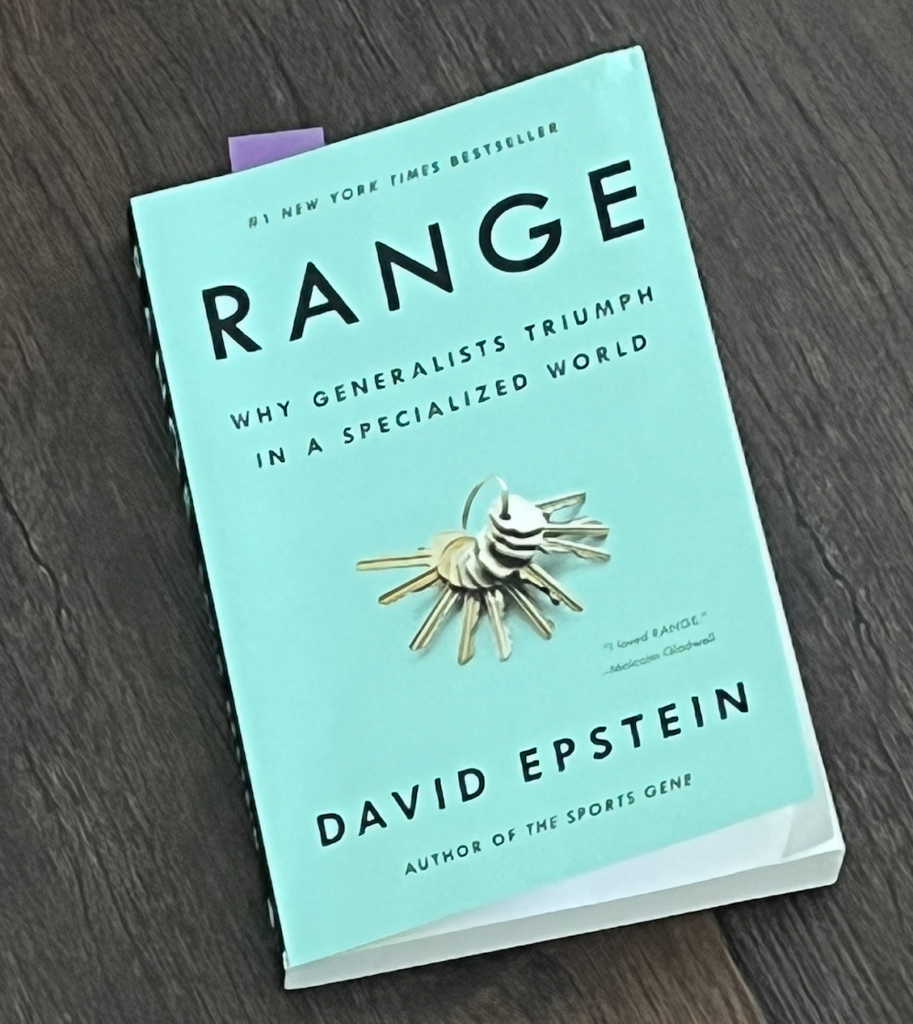
His answer came with a book recommendation, Range: Why Generalists Triumph in a Specialized World by David Epstein, and one line that struck me as hard as the title.
He doesn’t believe in obsession. He believes in breadth. In learning and exploring many things at once.
I’m not used to meeting people who think that way.
Ninety percent or more of the advice in circulation runs the opposite direction, and the chorus never changes: become an expert. Pick one thing. Stop being a squirrel. FOCUS. That’s why you never make any progress.
For once, someone was speaking my language.
I Never Thought Any of This Was Abnormal
I’ve never seen myself as an expert. I also never really knew how to become one because I had too many interests.
I’ve been casually playing piano since 1999 primarily improvisation. Lifting since I was eleven — thanks for winning that home gym dad. Engaged in several sports and activities (i.e., tennis, basketball, soccer, volleyball, ballet, tap dance, hip hop dance, salsa, cross country, etc). Investing since fourteen. Studying the Bible since childhood: not as a book of religion, but as a book of philosophy and wisdom. I’ve traveled to almost sixty countries, published thousands of articles and books, spent over a decade working in tech, and now I’m working on my sixth degree. I also manage a large pack because I’ve loved animals since childhood.
None of it was strategy. I simply like exploring. My curiosity is insatiable, and I carry a long list of questions I’d like answered before I’m done.
An expert at any single one of these things?
No. I’m adequate and some barely.
Early Pages, Loud Recognition
I just started the book, so consider this a disclaimer: everything here is opinion, and I’m genuinely curious whether Range shifts my philosophy or cements it.
But even the opening chapters landed.
Roger Federer played nearly every sport that involved a ball before he ever committed to tennis. He came to the game late by prodigy standards, and his parents were reportedly apprehensive about his interest in tennis — even though his own mother was an instructor of it.
The most elegant specialist in tennis history got there by refusing to specialize early.
That story didn’t teach me something new. It named something I’ve been living my entire life without a label.
Why I Never Went Deep
People have asked why I never picked a lane, or they only know about one lane or dimension.
The honest answer: doing one thing would suffocate me and feel insanely limiting.
I thrive on intake: new experiences, new subjects, new fields, and then the quieter work of pulling them together into one holistic picture. The piano feeds the discipline. The investing feeds the patience. The travel feeds the perspective. The writing feeds the synthesis. The Bible fuels the questions, the philosophical thinking, the thirst for wisdom. The degrees (psychology, women’s studies, political science, philosophy, political psychology, organizational leadership) have fueled my transition into other spaces of my career outside of product and program management.
None of them stand alone, and that’s the point.
There’s nothing wrong with specialization. I respect it. The world needs surgeons with ten thousand procedures behind them. Michael Jordan, Tiger Woods, Serena Williams, Taylor Swift. All of these people are G.O.A.T.s because of specialization. They are also anomalies.
For many, specialization has a hidden cost nobody bills you for upfront.
The Potential Problem With Patterns
When you focus on one thing, you get good at recognizing its patterns.
That’s the entire advantage, until the pattern breaks.
Introduce new variables (e.g., skyscrapers) into a specialist’s world, (let’s take a fireman/woman for example based on the book), and the deep expertise that made them brilliant can make them brittle. They keep reaching for the old map in territory that no longer matches it.
Or simply put, you can only do one thing. You only know one thing. You can only speak to one thing.
Adequate expertise across many fields works differently.
You’re never the smartest person in any single room, but you can walk into almost any room and orient fast. In a landscape that shifts quickly, agility beats depth more often than the experts want to admit.
Breadth isn’t the absence of mastery. It’s a different kind of mastery: the mastery of navigation.
One Caution
Something I’m learning in organizational leadership: watch your biases closely, because the most dangerous ones are the ones that flatter you.
A book that validates what I already believe is exactly the kind of book I should read skeptically.
I’ll report back as I move deeper into the book. If my thinking shifts, you’ll hear about it.
Your Move
If depth is honestly yours; if one craft pulls you so hard you’d do it for free forever, go deep and don’t look back.
But if you’ve spent years apologizing for being scattered, for starting too many things, for never picking a lane: stop apologizing.
You’re not scattered. You’re wide.
Pick one thing you’ve been curious about and start it this week. Not to master it.
To add it.
Note: There is a difference between starting many things and finishing, versus starting many things and never finishing.