Four lessons from The Intelligent Investor that just played out in real time
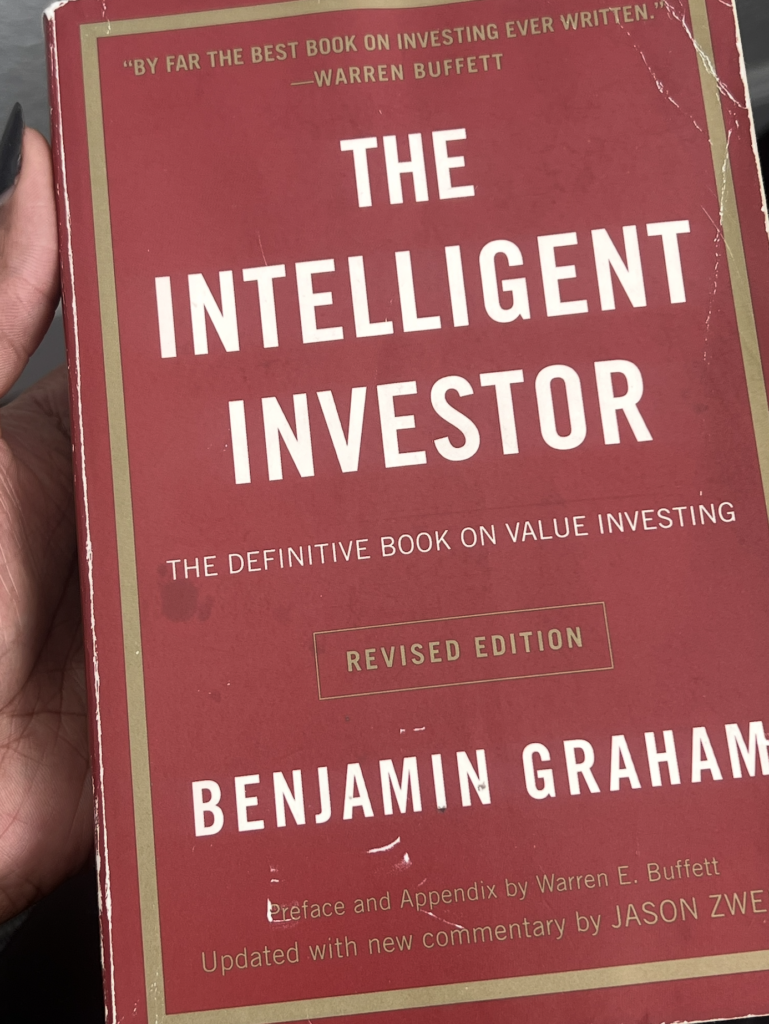
I’m working through The Intelligent Investor, Benjamin Graham’s classic with Jason Zweig’s modern commentary layered through it. This week’s reading covered what aggressive investors should never do, and one line I couldn’t forget.
Zweig writes that IPO doesn’t only stand for “initial public offering.”
It also stands for “It’s Probably Overpriced.”
He offers a few other translations too. Imaginary Profits Only. Insiders’ Private Opportunity. I laughed. Cause it’s true.
Lesson 1: The IPO game is rigged before you get a seat
SpaceX went public last month at $135 a share. Biggest IPO in history. The stock opened at $150, ran past $225 within days, and as I write this, it’s trading right back near $135 (i.e., I saw it bounce between 137 and 139 today), while the company posted a multi-billion dollar net loss last year and lost billions more in the first quarter.
A book published decades ago predicted this exact shape. Not SpaceX specifically. The pattern.
Zweig lays out the mechanics. The real IPO returns get captured by the private club: the banks and funds that buy at the underwriting price before public trading begins. By the time you can click “buy,” often the easy money is gone. His data: from 1980 through 2001, buying the average IPO at its first public closing price and holding for three years meant underperforming the market by more than 23 percentage points a year.
Read that again. Not underperforming by 23 points total. Per year.
Maybe SpaceX defies the pattern. Maybe it doesn’t. That’s not the point. The point is that if you’re buying an IPO on debut day, you’re not early. You’re the last one in the door, and you paid the cover charge for everyone who got in free.
Hold that thought. I’ll come back to it.
Lesson 2: Day trading is a wealth transfer from you to your broker
Zweig doesn’t soften this one. He calls frequent trading one of the best tools ever invented for destroying your own money.
Here’s the part nobody wants to hear. Some trades win. Some lose. But one party profits on every single transaction: the broker. You’re gambling. They’re collecting rent.
Two finance professors, Brad Barber and Terrance Odean, studied over 66,000 brokerage accounts. Before costs, active traders actually beat the market slightly. After costs, the most hyperactive traders underperformed by 6.4 percentage points a year. The most patient investors, the ones who barely touched their portfolios, kept nearly everything.
The activity felt like skill. The costs made it a losing game.
I know day trading has its celebrities. Andrew Aziz has seemed to do swell. For every one of them, there’s a graveyard of accounts you’ll never hear about, because losers don’t write books.
Lesson 3: There is only one kind of investor
Graham draws a hard line between investing and speculating, and Zweig sharpens it: the phrase “long-term investor” is redundant. Long-term is the only kind of investor there is.
If you’re planning to hold for a few months and flip on a price pop, you’re not investing. You’re speculating. Call it what it is. Speculating isn’t illegal. But lying to yourself about which game you’re playing is how people lose money they couldn’t afford to lose.
Lesson 4: Growth stocks don’t owe you anything
This is Graham’s own material, Chapter 7. Everyone wants the companies growing faster than average. Graham says fine. But there are two catches.
First, everybody else already noticed. Great prospects come pre-priced. You can be completely right about a company’s future and still make nothing, because you paid full price for prosperity that hadn’t happened yet.
Second, your judgment about the future might be wrong. Rapid growth cannot continue forever. The bigger a company gets, the harder it becomes to repeat the miracle.
Then Graham does something brutal. He checks the scoreboard. Professional growth funds, teams with more brains and better research than you or I will ever have, barely matched the plain market index over a full decade. If they can’t reliably win this game with every advantage, what’s your edge?
A great company and a great stock are not the same thing. The difference is the price you pay.
The part Graham couldn’t have predicted. He predicted it anyway.
Graham hammers one theme through the whole book: reported earnings are a starting point, not a verdict. Do the work. Look underneath.
Here’s a live example. A few years back, Amazon started a trend: extend how long your servers officially last on the books, and your depreciation expense drops. They stretched server life from four years to five, then five to six, and the rest of Big Tech followed within a year each time. Meta went furthest, extending its estimate to five and a half years effective 2025 and cutting roughly $2.9 billion from its reported depreciation expense in a single year. Longer useful life, lower expenses, fatter reported profits. All legal. All disclosed.
Then the pioneer blinked. In early 2025, Amazon shortened the useful life of a chunk of its servers back to five years, citing the accelerating pace of AI technology. The company that taught everyone the trick was the first to admit the assumption stopped holding. Meta, meanwhile, made its extension right before committing over $100 billion to AI infrastructure spending. More hardware than ever, assumed to last longer than ever, while chips become obsolete faster than ever. New generations now ship every 12 to 18 months.
Investors like Michael Burry have publicly argued these stretched assumptions inflate earnings across the industry. Whether he’s right about the dollar amounts, the structural fact stands: when the biggest companies in the world can’t agree on how long a server lasts, the reported profit number is an opinion, not a fact.
Graham would recognize this instantly. The numbers companies report and the reality underneath them are two different documents. Your job is to read both.
Pick one
Buy businesses, not tickers. Hold for years, not months. Skip the debut-day hype. And never take a reported number at face value when billions of dollars depend on an assumption someone chose.
Now, that thought from Lesson 1. I still bought into SpaceX pre-IPO and post-IPO, and I’m shamelessly bullish on space long term.
This is my personal reading and opinion, not professional financial advice. I’m not a financial advisor. I hold shares of SpaceX. Other stocks mentioned are for illustration only. Do your own research before investing a single dollar.